Queen Shiromani: How Artificial Intelligence Can Rewrite Forgotten Histories of Women's Resistance
Introduction
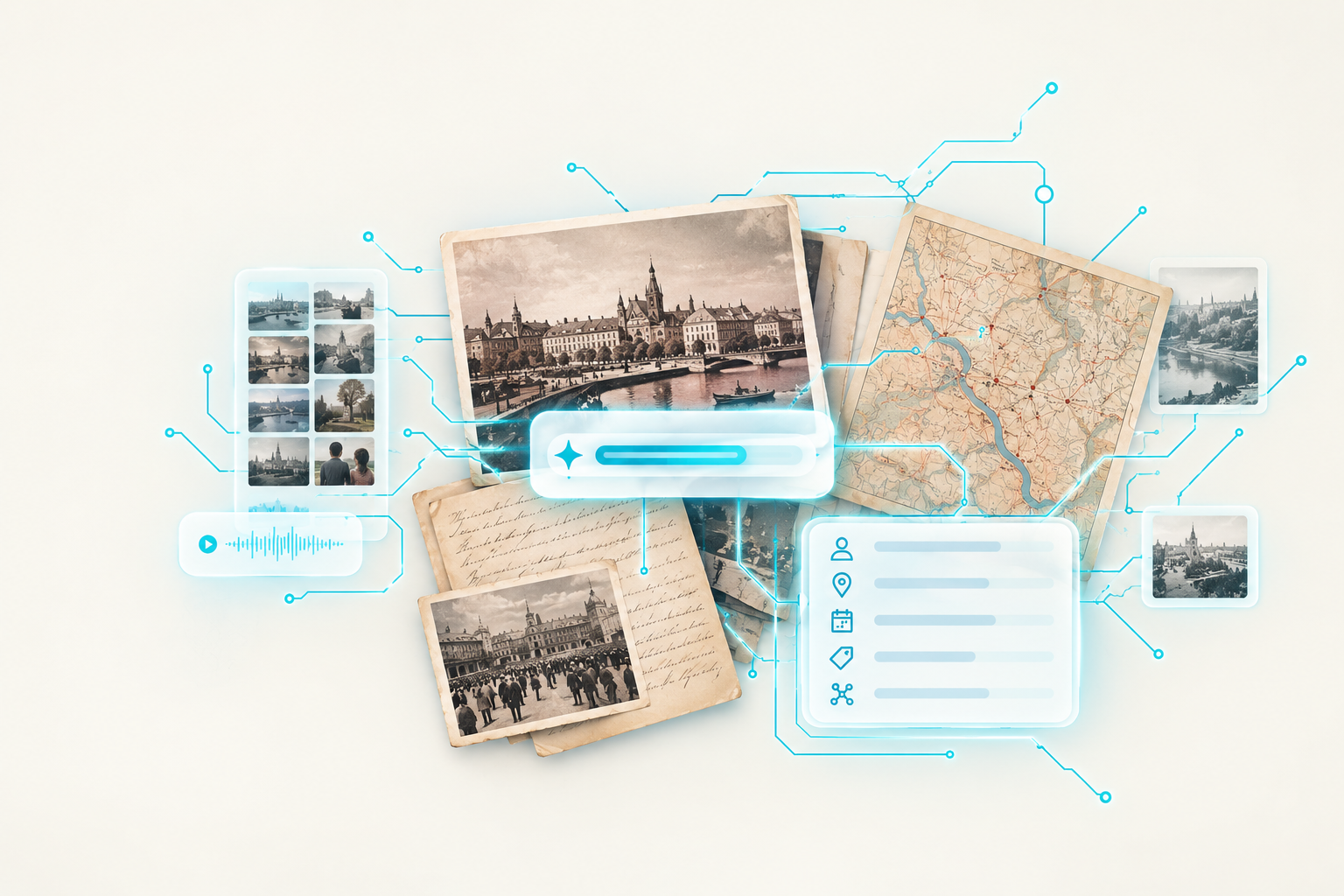
Artificial Intelligence (AI) has become a game-changer in the understanding and utilization of history, providing historians and researchers with exciting opportunities for discovery, analysis, and preservation. Although commonly linked to automation, chatbots, or predictive technologies, AI's increasing impact in the humanities has created new possibilities for bringing lost voices back from the searing of historical records and forgotten archives. In the realm of Digital Humanities, AI has become a major tool for the historical world by enabling the digitization of large bodies of manuscripts, colonial records, maps, and oral traditions, making them accessible and interrelated in digital form.
These innovations not only make archives more accessible, but also prompt historians to reconsider the way they approach their study of history. Digital Humanities' contribution to history recovery is the ability to bring back the history that has been marginalized and not included in the mainstream historical narrative.
Historical accounts have long been dominated by colonial rulers and male-dominated knowledge production processes, and feminist historians have consistently maintained that this is the case, with women's experiences and leadership being underrepresented.
AI can help address these historical silences by bringing together and synthesizing various archival, literary, archaeological, and community sources to create holistic digital stories. AI is not meant to replace historical interpretation, but rather is a research partner that can help historians identify patterns, connections, and forgotten historical players.
Karnagarh, Rani Shiromani, and the Historical Landscape of Resistance
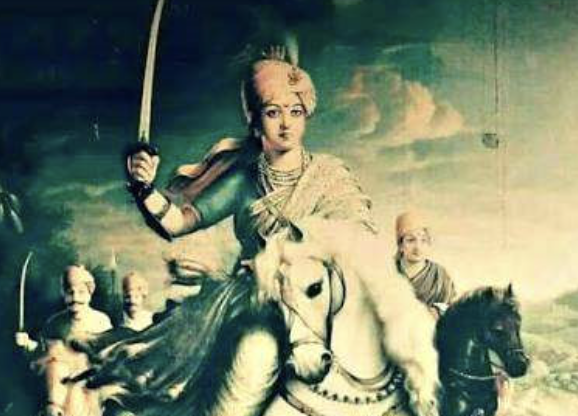
As part of these suppressed personalities is that of Rani Shiromani (c. 1728-1812) ~( Rani is the Bengali term of Queen, who was the Queen of Karnagarh of the present-day state of Paschim Medinipur in West Bengal, India. She is still remembered locally as one of the strongest leaders of the Chuar Rebellion against the British East India Company and one of the earliest women's resistance movements to the colonial expansion in eastern India.
However, the work of Rani Shiromani is not as well known as other anti-colonial actors of this period and is spread out between colonial letters, local history accounts, temple traditions, district records, and conversations. Her story poses an intriguing question: Can Artificial Intelligence prove useful in the reconstruction of forgotten history that conventional archives have overlooked?.
Rani Shiromani's importance can be understood in the backdrop of the historical context of Karnagarh, a royal town of the past, 10 kilometres away from present-day Medinipur town. Until the time of Karnagarh Raj, the area was guarded by a vast fort complex that comprised defensive walls, palaces, barracks, reservoirs, and the still-existing Dandeswar Mahadev and Mahamaya temples, which are significant examples of the Odisha school of temple architecture. Presently, these architectural remnants are not only monuments of heritage but also living archives, which help preserve the traces of the eighteenth-century political and cultural history of Bengal.
The remains of the fort, temple inscriptions, archaeological remains, local lore, and district records provide a rich, but fragmentary, historical tapestry waiting to be captured and interpreted on the web. After the death of Raja Ajit Singh without an heir, the administration of the Karnagarh estate was given to his queens, Rani Bhawani and Rani Shiromani. The Jungle Mahals were the site of several rebellions against the growing power of the British East India Company in this turbulent era. The Chuar rebellion of the late eighteenth and early nineteenth centuries was a series of peasant and tribal revolts in the forested areas of today's Midnapore, Bankura, Manbhum, and Dhalbhum.
These rebellions came about as a result of the colonial land revenue policy, economic dispossession, and the destruction of indigenous social and political structures. It is believed that Rani Shiromani, apart from being a supporter of the resistance, was also one of its key organizers, with Karnagarh as an important center for anti-colonial activities. British administrative documents reference guerrilla activity from the area, such as the capturing of the troops' weapons in 1799 and guerrilla resistance in adjacent villages.
Artificial Intelligence and the Digital Reconstruction of Forgotten Histories
Her historical memory is spread out in district gazetteers, legal records, revenue records, oral histories, temple traditions, and official colonial documents, all while local memory continues to speak of Rani Shiromani as the "Lakshmibai of Medinipur." She was the subject of a variety of different readings from different sources, and here both colonial fears and regional memory come into play. Rani Shiromani is an ideal case study for Digital Humanities, as it's not just a single document that offers historical evidence, but also landscapes, monuments, folklore, manuscripts, maps, and community memory are all important evidence offered by history.
Karnagarh is not just a place where a forgotten fort stood, but an archival space where its material remains and archival documents hold the memory of a very early leader of anti-colonial resistance in India. Artificial Intelligence and the Digital Reconstruction of Forgotten Histories.
The historical record of Rani Shiromani is not consistent and continuous, which is why AI is becoming more and more useful for historical studies. AI can analyze a vast amount of text, visual, and spatial data and deliver faster, more accurate results to historians without sacrificing scholarly interpretation, whereas traditional time-intensive archival methods would require historians to sift through thousands of disparate documents. AI isn't intended to replace the historian; it should broaden their potential for historical research by uncovering patterns that cut across archives that were previously hard to link.
The documentation of Rani Shiromani can be found in Bengali manuscripts, the correspondence of the East India Company, district revenue records, archaeological surveys, inscriptions on temples, local folk lore, and regional literature. Optical Character Recognition (OCR) technology based on Artificial Intelligence can convert the handwritten or printed Bengali manuscripts into digital archives that can be searched. Natural Language Processing (NLP) can then identify and map out places like Karnagarh, Salboni, Jungle Mahals, and Midnapore, and relationships between historical figures like Rani Shiromani, Gobardhan Dikpati, Trilochan Khan, and British administrators.
These technologies allow researchers to create interactive historical networks that can link people, places, events, and archival sources to create knowledge graphs instead of linear narratives. The use of digital mapping using Geographic Information Systems (GIS) is another way of interpreting history, in this case, by adding the spatial dimension to the Chuar Rebellion. AI-powered GIS platforms can be used to map the resistance geographically, map key routes between Karnagarh and neighboring villages, and combine colonial maps with the current topography.
Likewise, computer vision and photogrammetry can be used to virtually reconstruct the ruined Karnagarh Fort, enabling the study and interpretation of a virtual model of the eighteenth-century royal complex to be explored by researchers and the public. These technologies, when integrated with multilingual AI translation and digital annotation tools, make Karnagarh a dynamic public historical resource where archival records and monuments connect with oral history and history in the landscapes. AI helps to preserve cultural heritage and promote a feminist re-reading of history, thereby bringing to the fore women's stories from the past that have been overlooked or marginalized, such as those of Rani Shiromani.
Towards a Feminist Digital Archive: Reimagining Public History Through AI
The use of AI in historical research also presents some ethical and historiographical concerns. AI is learning from existing data, and the data stored in the archives may be a reflection of the biases of colonial administrators and patriarchal institutions. Without being examined, these biases can re-imburse historical silences rather than question them, and thus lead to the creation of new ones. Feminist Digital Humanities thus calls for an emphasis that AI should not be used to establish the historical facts, but rather to be used as a means for the historian to reflect on the archive, uncover its gaps and find alternative or marginalized voices in the researcher's interdisciplinary approach.
The case of Rani Shiromani shows how public history is a process that must be more inclusive, embracing beyond the printed biography to develop a historical resource that is more interactive and more community-centered. A Rani Shiromani Digital Archive could come together and become accessible to everyone, including all of the digitized manuscripts, East India Company correspondence, district records, oral history, archaeological evidence, temple traditions, photographs from the past, and GIS-based maps.
They were able to learn about an interactive timeline of the Chuar rebellion, take a virtual tour of the Chuar fort and the surrounding jungle Mahals, read translated archival documents, and a virtual view of the fort and landscape using AI reconstructions.
Such a platform could not only document cultural heritage but also help to share the work of historians, archivists, archaeologists, communities, and digital technologists. In the end, the tale of Rani Shiromani is a reminder that history isn't only an account of what has already happened but an ongoing conversation – one that is defined by the questions we ask and the evidence we keep.
While AI alone is not a panacea for rewriting history, its use in conjunction with feminist historiography and the Digital Humanities offers a means to recover lost histories, bring missing archives back together, and re-animate the visibility of women's contributions to history that have been silenced over the years. By doing so, AI can be a powerful tool for cultural memory, public history, and the creation of a more inclusive understanding of the first anti-colonial resistance in India.