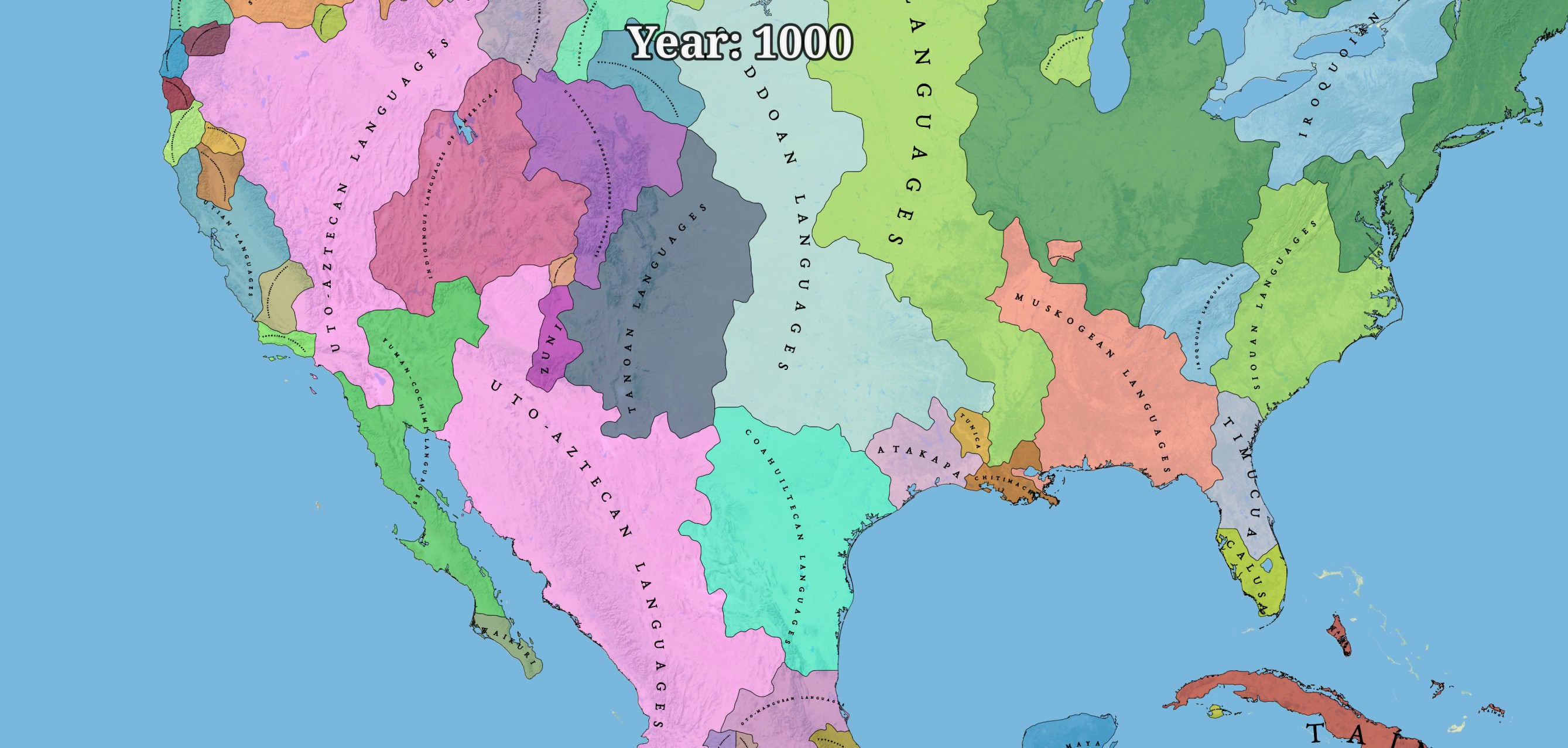
Historical language map of North America in 1000 AD, showing the geographical distribution of Indigenous language families across the continent.

Future Plans: New Historical Map Layers & Upcoming Improvements

Historica continues to expand its historical mapping project, with new thematic layers in development, upcoming regional map updates, and improvements to the technology behind the platform.

While we continue updating our main Geopolitical Entities maps and improving regional coverage, we're also making progress on several new types of historical maps. These additions will help users explore different aspects of human history, from the spread of diseases to the development of languages and religions.

Here's a closer look at what's currently planned.

1. Epidemic Maps

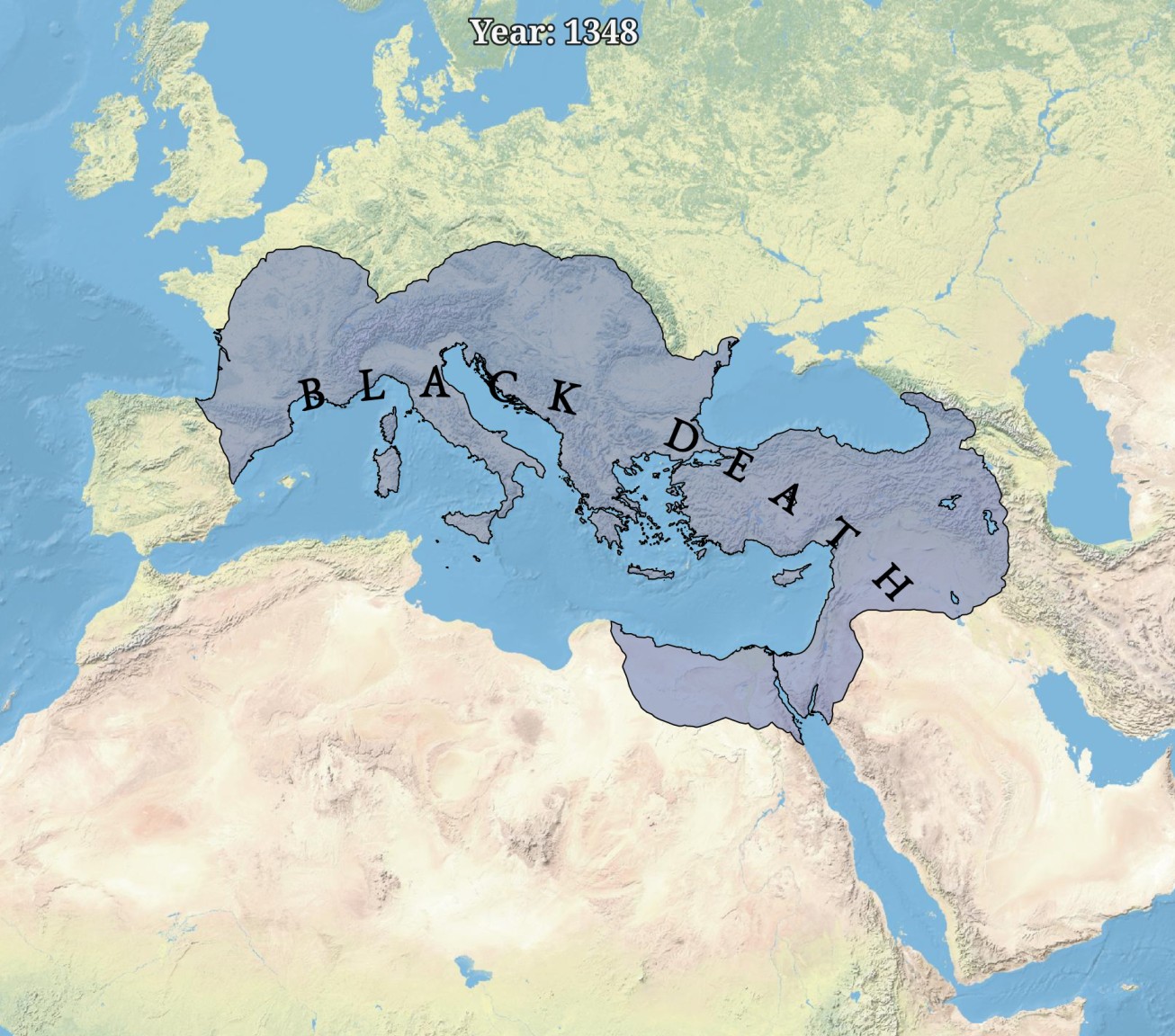
We're planning a new collection of maps dedicated to major epidemics throughout human history. These maps will illustrate the geographical spread of major outbreaks, helping users explore how diseases affected different regions and populations over time.
‍

Black Death 1348 Map

2. Language Maps

We are planning two complementary types of language maps:

  • Major Languages: Maps showing the geographical distribution of the world's most widespread languages, such as Latin.
  • Combined Language Maps: Maps showing regions where two languages were widespread or coexisted, such as Latin and Gaulish.

Both sets are planned to cover an extensive historical timeframe, from 4000 BC to 2000 AD.

3. Religion Maps

Religion maps are also in development. Following a similar approach to the language maps, we plan to create several sets covering major religions, smaller religious branches, and regions where different religious traditions coexisted.

Upcoming Geopolitical Map Updates

Alongside these new thematic layers, we're continuing to improve our main geopolitical maps.

The next major regional updates will focus on the Americas and Australia. As with our recent work on Africa and Eurasia, these updates will focus on historical accuracy, geographical detail, and improvements to the underlying datasets.

Core Map Builder Optimization

Another important area of development is the optimization of our core map-building engine.

As our datasets grow and the project expands, we need a system capable of processing increasingly large amounts of historical and geographical information efficiently.

So far, our optimization work has delivered promising results:

  • Nearly 2x faster map generation.
  • Nearly 2x lower memory consumption.

These improvements will make it easier to process larger datasets, develop more complex map layers, and accelerate future updates.

Expanding the Scope of Historical Mapping

Our goal is to expand Historica beyond traditional geopolitical maps and provide a broader picture of human history, culture, and civilization.

New thematic layers, improved regional maps, and ongoing technical development will all contribute to this goal.

There is still plenty of work ahead, but we're looking forward to sharing more details as development progresses.

Stay tuned for more Historica updates!

‍

Don't miss out on the latest news!
Thank you! Your submission has been received!
Oops! Something went wrong while submitting the form.

People also read

Historical language map of North America in 1000 AD, showing the geographical distribution of Indigenous language families across the continent.

Future Plans: New Historical Map Layers & Upcoming Improvements

A preview of Historica's upcoming map layers, including epidemics, languages, and religions, alongside regional updates and improvements to the Map Builder.

November 24, 2026
•
3
min read
Historical Maps

Historica Joins the NVIDIA Inception Program to Advance Map Technology

Historica has joined the NVIDIA Inception program, gaining access to NVIDIA’s technology ecosystem to expand its research and advance its map technology.

November 2, 2026
•
3
min read
News
Historica map builder

Explore Historica’s Map Builder – Closed Beta for Researchers

Map Builder is Historica’s new tool for creating custom historical maps — now in closed beta. Combine your sources with editable borders, cities, and timelines to explore and present history with precision.

March 18, 2026
•
2
min read
News

Contribute to Historica's blog!

Learn guidelines, requirements, and join our history-loving community.

Become an author

FAQs

How can I contribute to or collaborate with the Historica project?
If you're interested in contributing to or collaborating with Historica, you can use the contact form on the Historica website to express your interest and detail how you would like to be involved. The Historica team will then be able to guide you through the process.
What role does Historica play in the promotion of culture?
Historica acts as a platform for promoting cultural objects and events by local communities. It presents these in great detail, from previously inaccessible perspectives, and in fresh contexts.
How does Historica support educational endeavors?
Historica serves as a powerful tool for research and education. It can be used in school curricula, scientific projects, educational software development, and the organization of educational events.
What benefits does Historica offer to local cultural entities and events?
Historica provides a global platform for local communities and cultural events to display their cultural artifacts and historical events. It offers detailed presentations from unique perspectives and in fresh contexts.
Can you give a brief overview of Historica?
Historica is an initiative that uses artificial intelligence to build a digital map of human history. It combines different data types to portray the progression of civilization from its inception to the present day.
What is the meaning of Historica's principles?
The principles of Historica represent its methodological, organizational, and technological foundations: Methodological principle of interdisciplinarity: This principle involves integrating knowledge from various fields to provide a comprehensive and scientifically grounded view of history. Organizational principle of decentralization: This principle encourages open collaboration from a global community, allowing everyone to contribute to the digital depiction of human history. Technological principle of reliance on AI: This principle focuses on extensively using AI to handle large data sets, reconcile different scientific domains, and continuously enrich the historical model.
Who are the intended users of Historica?
Historica is beneficial to a diverse range of users. In academia, it's valuable for educators, students, and policymakers. Culturally, it aids workers in museums, heritage conservation, tourism, and cultural event organization. For recreational purposes, it serves gamers, history enthusiasts, authors, and participants in historical reenactments.
How does Historica use artificial intelligence?
Historica uses AI to process and manage vast amounts of data from various scientific fields. This technology allows for the constant addition of new facts to the historical model and aids in resolving disagreements and contradictions in interpretation across different scientific fields.
Can anyone participate in the Historica project?
Yes, Historica encourages wide-ranging collaboration. Scholars, researchers, AI specialists, bloggers and all history enthusiasts are all welcome to contribute to the project.